
24-hour report review. India and international patient support. WhatsApp +91 99449 38508 →

Advanced Neurosurgery · India · Medifly Healthcare

Spine Tumor Surgery in India — protecting movement, stability and life.

Spinal tumours can press on the spinal cord, nerves or vertebrae, causing pain, weakness, numbness and loss of balance. Medifly connects each patient with an experienced spine surgeon, neurosurgeon or surgical oncologist based on the tumour's exact location, then coordinates imaging review, hospital admission, surgery and recovery support.
  • Doctor AppointmentsWith India's top specialists
  • Medical Visa InviteDocumentation assistance
  • Translation ServicesArabic · Russian · French · more
  • Transparent Treatment CostsNegotiated, all-inclusive quotes
  • Best Hospitals MatchedApollo · Fortis · MGM · Gleneagles
  • Stay & AccommodationNear-hospital, family-friendly
  • Post-Treatment Follow-UpRemote consults after you return
15,000+Patients guided
20+Countries served
24 hrsInitial review target
NABH/JCIAccredited hospital options
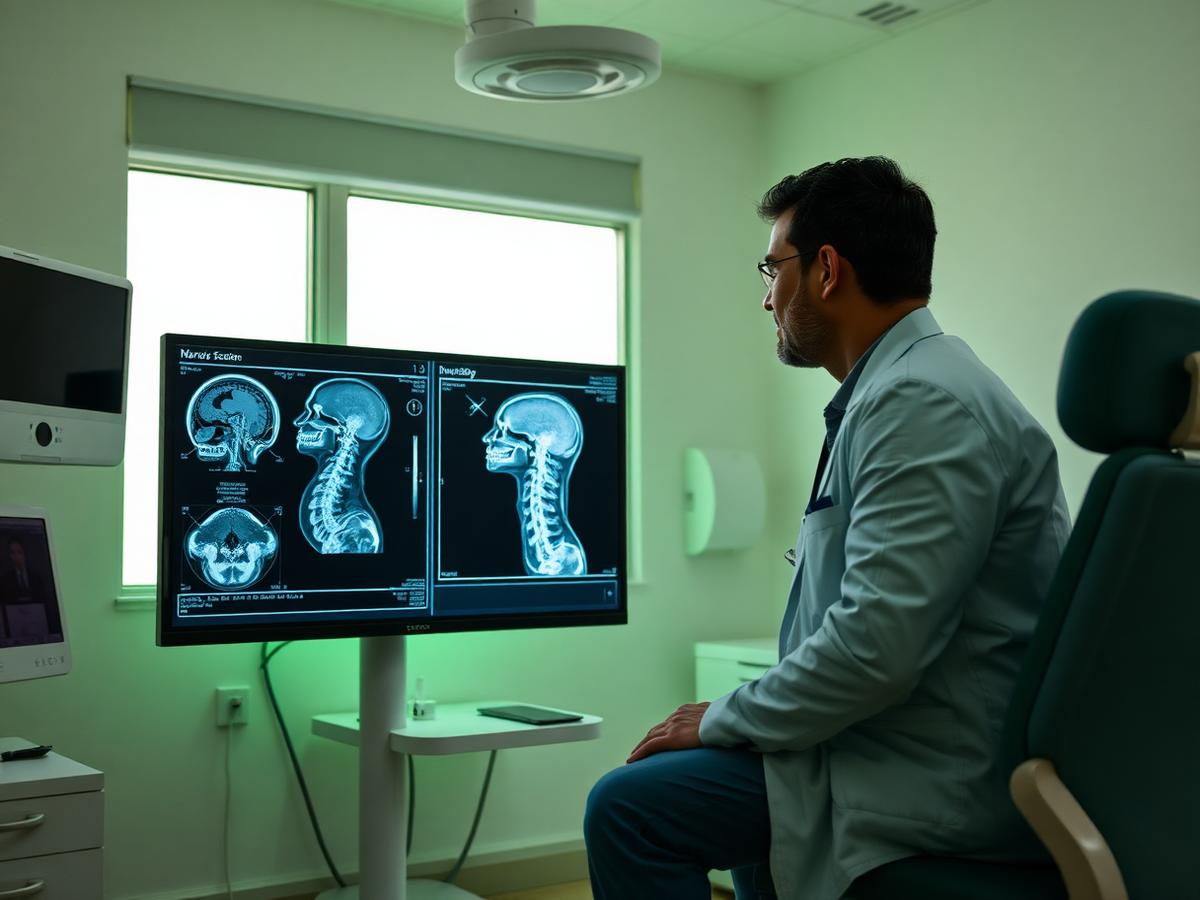
Specialist reviewing a spine tumour MRI with a patient in India
Case-matched planning.

Neurosurgery, spine oncology, radiation oncology and rehabilitation coordinated around one treatment plan.

Senior teamsSpine & neurosurgical specialists
NeuromonitoringIntraoperative cord protection
Written estimatesTransparent, case-specific
Visa to recoveryEnd-to-end assistance
What Is Spine Tumor Surgery?

Removing or controlling a tumour while preserving neurological function.

A spinal tumour is an abnormal growth in or around the spinal cord and spinal column. It may be benign or malignant, begin in the spine, or spread from another cancer. Tumours are described by location: intramedullary (inside the spinal cord), intradural-extramedullary (inside the covering but outside the cord), or extradural/vertebral (outside the covering, often involving bone).

Spine tumour surgery aims to obtain tissue for diagnosis, remove as much tumour as safely possible, relieve pressure on the cord or nerves, stabilise weakened vertebrae and preserve mobility. Complete removal is not always the safest goal; sometimes a planned subtotal removal followed by radiotherapy provides better functional protection.
Urgent warning: New or worsening limb weakness, difficulty walking, loss of bladder or bowel control, or numbness around the groin can indicate spinal cord or cauda equina compression. Seek emergency medical care immediately.
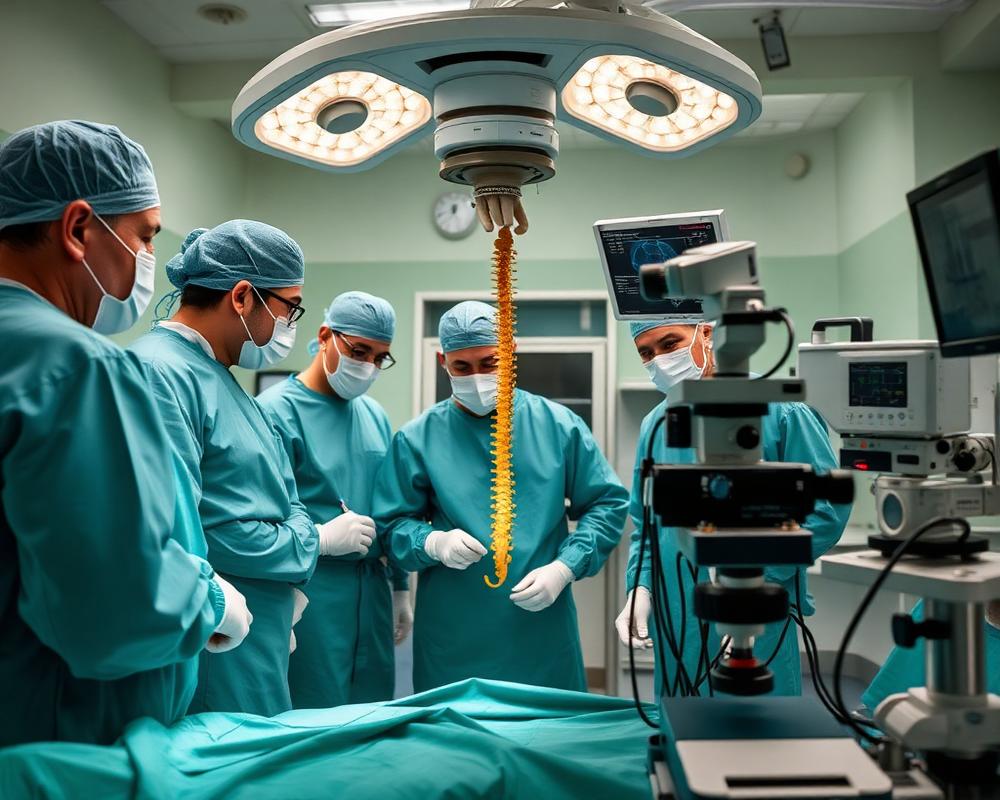
Spine surgery team with operating microscope and neuromonitoring in an Indian hospital
When Surgery May Be Needed

Symptoms and findings that deserve specialist attention.

Not every spinal tumour requires immediate surgery. The decision depends on neurological symptoms, tumour behaviour, spinal stability, overall cancer status and the expected benefit of intervention.

01

Progressive Nerve Symptoms

Weakness, numbness, altered sensation, imbalance, walking difficulty or reduced hand coordination that is worsening.

02

Persistent or Night Pain

Local spinal pain, band-like chest or abdominal pain, or pain radiating into an arm or leg, especially when persistent at rest.

03

Spinal Cord Compression

MRI showing pressure on the cord or cauda equina, particularly when neurological function is at risk.

04

Spinal Instability

A vertebral tumour has weakened bone, caused collapse or deformity, or creates painful movement requiring stabilisation.

05

Need for Diagnosis

Biopsy or surgical tissue is needed to identify tumour type and guide chemotherapy, radiotherapy or targeted treatment.

06

Potentially Resectable Tumour

A tumour can be safely removed or reduced to improve pain, function, local disease control or quality of life.

How Medifly Plans Your Case

One MRI can involve several specialties.

The safest plan is based on tumour anatomy and biology, not a generic package.

Report Review

Share MRI spine images, radiology report, biopsy, PET-CT and treatment history for review within 24 hours.

Team Matching

Your case is directed to a neurosurgeon, spine surgeon, oncologist and radiation specialist as required.

Plan & Estimate

Receive the intended surgery, likely hospital stay, tests, expected cost range and possible alternatives in writing.

Travel & Treatment

Medifly coordinates visa documents, appointments, admission, local support, discharge and follow-up.

Surgical Approaches

The operation is matched to the tumour's location and purpose.

01

Laminectomy & Tumour Removal

Part of the back of the vertebra is opened to access and remove an intradural or spinal canal tumour while decompressing neural structures.

02

Microsurgical Resection

An operating microscope and fine instruments help separate tumour from the spinal cord, roots and blood vessels.

03

Decompression & Stabilisation

Tumour pressure is relieved and weakened vertebrae are supported using screws, rods, cages or bone graft when necessary.

04

Vertebrectomy / Corpectomy

Part or all of a tumour-involved vertebral body may be removed and reconstructed in selected primary or metastatic tumours.

05

Minimally Invasive Surgery

Selected accessible tumours or stabilisation procedures may use smaller incisions, reducing muscle disruption and blood loss.

06

Biopsy or Debulking

When total removal carries excessive risk, the goal may be diagnosis, decompression or safe tumour reduction followed by other therapy.

Step-by-Step Procedure

What happens before, during and after surgery.

01

Pre-operative Mapping

MRI with contrast, CT, blood tests, cardiac and anaesthesia assessment and, where needed, PET-CT, angiography or biopsy.

02

Anaesthesia & Positioning

General anaesthesia is used. The patient is positioned to give safe access while protecting pressure points and breathing.

03

Monitoring & Removal

Neuromonitoring may track spinal cord and nerve signals as the surgeon exposes, samples, separates and removes the tumour.

04

Closure & Recovery

Stabilisation is added if required. After closure, neurological function, pain, wound and mobility are monitored closely.

Eligibility & Decision Factors

Is spine tumour surgery right for you?

A multidisciplinary team weighs the expected benefit against neurological and surgical risks. Age alone does not decide suitability.

  • Tumour type, size and growth rate
  • Exact relationship to the cord and nerve roots
  • Current weakness, sensation and walking ability
  • Spinal stability and vertebral collapse
  • Primary versus metastatic disease
  • Overall health and anaesthesia fitness
  • Response expected from radiation or systemic therapy
  • Patient goals and quality of life
Observation, stereotactic radiotherapy, conventional radiotherapy, chemotherapy, targeted therapy or pain-focused treatment may be more appropriate than surgery in some cases.
Doctor explaining a spine tumour treatment plan to a patient and family
Benefits & Honest Risks

A careful balance between tumour control and function preservation.

Potential Benefits

  • Relief of spinal cord or nerve compression
  • Improved or preserved strength and mobility
  • Pain reduction and improved spinal stability
  • Definitive tissue diagnosis
  • Better local tumour control

Possible Risks

  • New or worsened weakness or numbness
  • Bleeding, infection or CSF leak
  • Blood clots and anaesthesia complications
  • Instability, implant issues or non-union
  • Residual or recurrent tumour

Risk-Reduction Tools

  • High-resolution MRI planning
  • Operating microscope and image guidance
  • Intraoperative neuromonitoring
  • Experienced neuro-anaesthesia
  • Early rehabilitation and clot prevention
Recovery Timeline

Recovery varies, but patients should know the usual milestones.

Day 0–1

Close Monitoring

Pain control, neurological checks, breathing support and wound observation.

Days 1–4

Mobilisation

Physiotherapy starts as safe; drains or urinary catheter are removed when appropriate.

Days 4–10

Discharge Window

Many patients leave hospital in this range; complex cases can need longer.

Weeks 2–6

Early Healing

Wound review, gradual activity, pathology discussion and adjuvant-treatment planning.

Weeks 6–12+

Functional Recovery

Strength, walking and endurance improve with rehabilitation; recovery may continue for months.

Timelines are indicative. Pre-operative nerve damage, tumour biology, extent of surgery and additional oncology treatment can substantially change recovery.

Spine Tumor Surgery Cost in India

Transparent planning, with the final estimate based on your MRI.

Illustrative ranges only. Currency values and hospital tariffs change; Medifly provides a written case-specific estimate after clinical review.

Procedure / Care LevelIndicative India RangeWhat Can Change the Cost
Spinal tumour biopsy / limited decompressionUSD 3,500–7,000Access method, imaging guidance, pathology
Microsurgical intradural tumour removalUSD 5,000–12,000Tumour level, neuromonitoring, ICU and stay
Decompression with instrumentationUSD 7,000–15,000Number of levels, implant system, reconstruction
Complex vertebral tumour resectionUSD 10,000–25,000+Multi-team surgery, blood products, ICU, implants

Packages may exclude additional radiotherapy, chemotherapy, molecular tests, treatment of complications, extended rehabilitation or prolonged accommodation unless stated in writing.

For Patients Travelling to India

Prepare the records that help surgeons answer faster and more clearly.

  • MRI spine with contrast — images/DICOM and report
  • CT spine and PET-CT, if already completed
  • Biopsy, histopathology and immunohistochemistry
  • Current medicines, allergies and medical conditions
  • Previous surgery, radiation or chemotherapy summary
  • Recent blood tests and cardiac records if relevant
  • Short video showing walking or limb movement, if advised
  • Passport copies for patient and attendant
Medifly Support Includes

Everything around the surgery, handled.

  • Hospital invitation letter and medical-visa documentation
  • Appointment coordination and admission assistance
  • Airport pickup, nearby accommodation and local transport
  • Language and translation support
  • Regular updates for family at home
  • Discharge planning and online follow-up after return
Hospital Network

Care coordinated with established multispecialty hospitals in India.

Hospital selection depends on tumour complexity, surgeon fit, technology, ICU support, rehabilitation needs, location and budget.

Apollo Hospitals
MGM Healthcare
Gleneagles HealthCity
Fortis Healthcare
Kauvery Hospital
SIMS Hospitals

Explore Partner Hospitals

Frequently Asked Questions

Spine tumour surgery — answered simply.

No. Many spinal tumours are benign, including some meningiomas, schwannomas and ependymomas. Even benign tumours can cause serious neurological problems because the spinal canal has limited space.
Urgency depends on symptoms and imaging. Progressive weakness, inability to walk, bladder or bowel changes, or acute cord compression may require emergency assessment. Slow-growing tumours without deficits may allow planned evaluation.
Some well-defined tumours can be removed completely. Others are attached to or infiltrate the cord, nerve roots, vessels or vertebrae, making subtotal removal safer. The surgeon should explain the planned extent and neurological trade-offs.
Many patients walk after surgery, but the outcome depends strongly on function before surgery, tumour location and operative risk. Early treatment before severe neurological damage generally offers a better chance of preserving function. No responsible team can guarantee walking ability.
Possibly. Pathology, tumour grade, residual disease and whether the tumour is primary or metastatic determine additional treatment. Surgery is often one part of a combined oncology plan.
A straightforward case may require about 2–4 weeks including assessment, surgery and early review. Complex reconstruction, complications or rehabilitation can require longer. Book flexible travel only after the treating team advises it.
Send your latest contrast MRI images and report, biopsy or pathology if available, PET-CT or cancer records, prior treatment summary, current symptoms and medicines. WhatsApp them to +91 99449 38508.
Start With a Specialist Review

Do not plan spine tumour surgery from a price alone.

Send your MRI and medical records to Medifly. We will help obtain an expert opinion, identify the appropriate hospital and surgical team, explain the recommended pathway and provide a written estimate before you make travel decisions.